Our Struggle
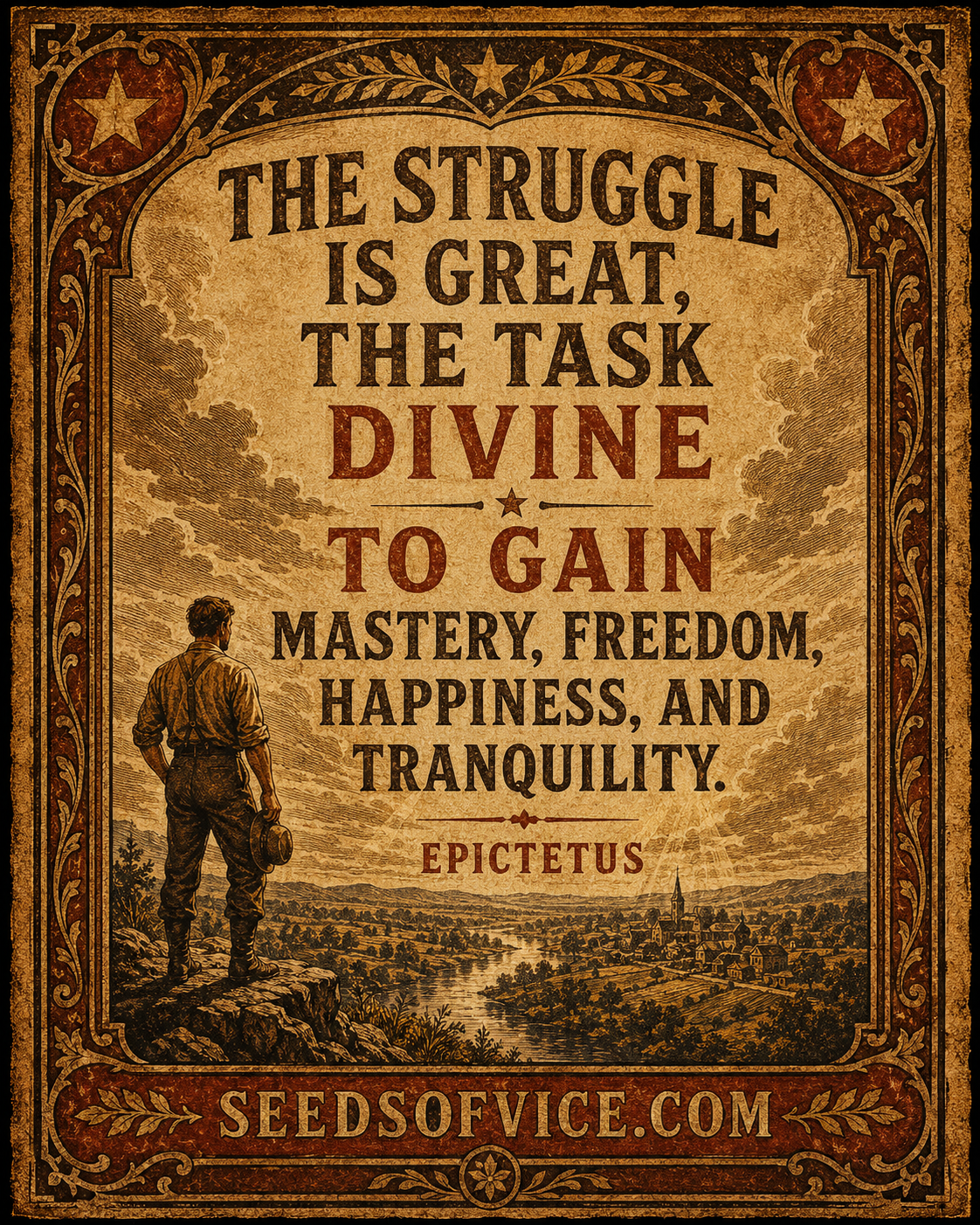
The quote is usually passed around under the wrong name. People attach it to Marcus Aurelius because it sounds imperial, disciplined, old, and severe, but the thought belongs more properly to Epictetus: the struggle is great, the task divine, to gain mastery, freedom, happiness, and tranquility. That sentence matters because it does not treat suffering as decoration. It does not turn endurance into a slogan. It names the private work of a person who has to keep possession of themself while something inside their body keeps demanding attention from everything else.
For people in pain, that is not philosophy on a wall. That is a 24/7 reality. It can come between people… when someone always hurts, their mind is a fog, they haven’t slept more than a couple hours at a time in as long as they can remember… patience is thin, and life still expects the person to behave as if what is happening inside themself is not happening.
Our struggle is pain, and pain is never only pain. It may begin in the spine, joints, nerves, muscles, bones, one’s gut, head, or some damaged place a doctor can name, but once it persists long enough, it spreads into every aspect of life. It gets into sleep, memory, patience, marriage, parenting, friendships, faith, money, appetite, hygiene, work, dignity, and hope, not as separate little problems lined up neatly in a row, but as one constant pressure moving through the whole person throughout each day. It changes how long someone can stand in a kitchen, how a text message feels, whether a shower is refreshing or exhausting, whether a family dinner is a gift or an ordeal, whether driving across town is worth the price that will be paid later.
You can see it on our face, and hear it in our voice. It changes our monthly calendar which is structured equally between work and healthcare appointments. Those two main priorities often conflicting. It shows in our bank accounts, our sex life, and in the way we even sit. Pain also shows out each morning in how we measure the day before the day has even begun. This is our life.
This article is for the people who love someone in pain and want to understand what they can without having to live it. It is for the spouse who misses who their person used to be, the parent who keeps looking for the heart to endure with their child, the adult child who feels distance and does not know what their parents are now facing, the sibling or friend who has watched invitations turn into cancellations, conversations turn shorter, and a once present person become harder to reach. It is not written as a defense, because the people we are trying to reach already believe the hurting person is honestly in pain. It is not written as an accusation either, because no one outside the person in pain can be expected to know what the body is doing in secret. It is a window, something that can be handed to a person who wants to understand and is willing to accept that understanding has limits.
We do not wish this life on anyone. To truly know chronic pain from the inside, a person has to be chained to it, and we do not want the people we love to know what it means to always be in pain. What we need from people is not perfect understanding. What we need is acceptance.
Pain is ever present in our lives, even when it is not nearly as bad as it could be, even when we are smiling, laughing, working, talking, eating, sitting in the same room as everyone else, or doing something that appears normal enough to make people forget we are not ok. We do not always scream, but the pain always speaks, and part of the mind is always listening. Aware. That is one of the great drains people do not see. A hurting person is rarely doing only the visible task. The body is also being monitored, managed, negotiated with, braced against, and endured.
Standing at the counter may require attention. Sitting through a visit may require strategy. Walking through a store may require a private calculation about how far the entrance is from the car, how long the line might be, whether there is somewhere to sit, and how much will be left in them afterward. People outside this life often see the activity and assume ordinary effort produced it. They do not see the cost because much of the cost is paid later.
That cost is why consistency becomes almost impossible. A good hour does not promise a good day, and a good day does not promise a good week. Being able to do something once does not mean the body can repeat it on command. Plans get made honestly and canceled honestly. The person meant to go. The person wanted to go. The person may have prepared mentally all week to go, then the body changed the terms without asking permission when the hour finally came.
That is not flakiness, not disrespect, nor manipulation, and there is no implied meaning that speaks to the relationship. It is what happens when life is lived under a condition that does not obey the calendar or abide by a schedule. We do as much as we can when we can, and it costs us physically and mentally, which means over time we may be able to do less, less often, especially when we are under medicated, poorly treated, or carrying the consequences of non treatment.
Every day is a marathon we do not want to run.
That line is not melodrama. It is the closest simple way to describe the constant drain. A healthy person may imagine pain as an event inside the day, something that interrupts life. For many of us, pain is the ground the day is built on. The whole day is negotiated over it. The body wakes already in debt, then ordinary life begins making withdrawals. Work, children, errands, cleaning, appointments, conversation, family obligations, basic hygiene, the small acts that make a person look functional, all of them pull from the same limited account.
When relief comes, whether through medicine, heat, movement, stillness, prayer, distraction, stubbornness, or sheer will, we may use that window to do everything that has been waiting for a good day. That looks encouraging from the outside, but often what people are seeing is not recovery. They are seeing a person spend temporary relief as fast as possible before it disappears.
Then the bill comes due.
The bill may arrive that evening, when the body finally gets still and every hour of forced function announces itself. It may arrive the next morning, when the person wakes heavy, inflamed, fogged, irritable, and ashamed because yesterday looked like a victory and today looks like failure. It may arrive two days later, when everyone else has moved on and the hurting person is still paying for attending the birthday party, cleaning the house, taking the children somewhere, going to church, walking too far, sitting too long, or acting fine for too many hours in a row.
Loved ones often see only the event and the collapse, then try to connect them with ordinary logic. They ask why something enjoyable made the person worse, why a short outing cost so much, why one productive day was followed by three bad ones. The answer is that pain keeps accounts, and the body collects whether anyone else understands the debt or not.
The mask we have to wear that normalizes us makes this harder. People in pain wear masks to protect others, avoid judgment, keep dignity, survive socially, and sometimes to protect themselves from the truth of how bad things have become. We say we are fine because we do not want every conversation to become a report of negativity. We smile because the room needs one less heavy thing in it. We act capable because being treated as incapable can feel like another loss.
We tell ourselves we are okay when we are not, that we can handle more than we can, that we are improving, that we will get better, and sometimes those inner statements are not lies in the ordinary sense so much as ropes thrown across the next hour. Fake it till you make it can be a survival method. It can carry a person through work, parenting, a social obligation, a hard conversation, or a day that would otherwise stop moving altogether.
The trouble is that the world believes the performance. When we look okay, people begin to expect us to be okay. When we push through once, they expect us to push through again. When we act normal in public, they forget what it took to produce that normal appearance, and the mask that helped us keep dignity becomes the evidence used to demand more than we had to give. A clean shirt, a joke, a smile, a completed errand, a few hours at a gathering, a decent photograph, a stretch of normal conversation, any of these can be mistaken for proof that the person is functioning better than they are. However bad it looks on the outside, it is often at least twice as bad inside, and sometimes closer to ten times as bad, because most of us hide the worst of it until we cannot hide anymore.
Sleep is one of the greatest hidden factors, and it may be the one people understand least. For healthy people, sleep is where the day ends and repair begins. For many people in pain, night is not rest. Night is stillness, and stillness gives pain more room. The distractions are gone, the house is quiet, the obligations have paused, and the body that was forced through the day now has nothing to hide behind. No position works. The body burns, the joints throb, the nerves fire, the hips refuse peace, the neck locks, the legs ache, and whatever was held at bay by movement or distraction begins speaking louder. Some people sleep in fragments for years, two hours at a time, an hour at a time, waking to shift, brace, breathe, wait, doze, wake again. After enough years, this becomes more than tiredness. It feels like malnutrition, as if the body is being slowly starved of restoration.
That comparison is important because sleep is not a luxury or a mood enhancer. Sleep is repair. It is where the body rebuilds, where the mind resets, where memory settles, where emotions return to proportion, where patience is restored before the next demand arrives. When pain breaks sleep night after night, the person is not merely tired. The body has been denied repair, the mind has been denied recovery, and the emotions have been denied the chance to reset. Then morning comes anyway. Bills still exist, children still need care, food still has to be made, animals still need to go out, work still expects a worker, the phone still rings, and the world still judges the person by the standards of a body that slept.
Eventually the body shuts down. This crash can look like laziness, depression, irresponsibility, or giving up from the outside, but often it is the body physically engaging its survival programming after too much pain, too little sleep, too much performance, and too many obligations carried past the point of repair. A person may disappear for a day or two, sleep in a way that looks excessive, stop answering messages, become emotionally absent, or have nothing left to give anyone. What looks like withdrawal may be the body collecting what has been borrowed from it for too long. It is not pretty, and it is not always easy for loved ones to live around, but it is real. When the crash comes, accusation only deepens the exhaustion. What helps is quiet, patience, fewer demands, practical mercy, and the willingness to let a person recover without turning recovery into another debt.
Relationships suffer under this because pain breaks normal reciprocity. Most relationships expect some kind of balance over time. People call each other back, show up for each other, make plans, keep plans, share emotional energy, help when help is needed, celebrate together, grieve together, and maintain the bond through ordinary give and take. Deep pain distorts that balance. A relationship with a hurting person may involve more of their taking than giving, more patience required than returned, more plans canceled than kept, more silence than explanation, more absence than anyone wanted.
That is hard to admit because the hurting person usually knows it already. We know what our pain costs other people. We know when the room changes around us, when invitations slow down, when friends stop asking after we have bailed too many times, when family starts assuming we will not come, when people quietly build life around our absence because hoping for our presence became inconvenient.
We often understand why people do it. That does not make it hurt less.
The person in pain does not usually want to be alone. Withdrawal does not always mean rejection, silence does not always mean indifference, canceling does not mean the event did not matter, and failing to call does not mean love has disappeared. Sometimes the person is ashamed, exhausted, fogged, hurting too badly to speak lightly, or unable to bear another conversation where the same condition has to be explained again. Sometimes we avoid people because we do not want every relationship to become another place where pain must be discussed. Sometimes we stay quiet because we are tired of hearing ourselves say we hurt. Sometimes we are trying to spare the people we love from the weight of us, while also aching because that same attempt makes us easier to forget.
That is why acceptance matters more than perfect understanding. The loved one does not have to feel what we feel, and we do not want them to. What matters is accepting the relationship we are actually able to offer, rather than punishing us for the relationship pain has made impossible. Stop measuring everything by normal reciprocity, equal calls, equal visits, equal plans, equal energy, equal emotional availability, equal cheerfulness, equal participation. Measure whether the person is still trying to remain connected at all. A text may be the effort, thirty minutes at the table may be the act of love, answering the phone may be all the person had to give, and the mistake is comparing those offerings to a normal life instead of weighing them against the cost of producing them.
Medicine complicates this in ways families often misread. A person may need relief, then need more relief, while appearing to do less and less. From the outside, suspicion can grow quickly. People begin to wonder whether the medicine is being abused, whether the person is becoming weaker because of it, whether the medicine has become the problem. The truth is often more complicated and more painful. Medicine can give enough relief to function, but that function still has a cost. It can make action possible while also stealing from the body’s ability to bear the pain when it wears off. It can allow someone to clean, work, attend, parent, or participate for a while, and then, when the relief fades, leave the person worse off because the body now has to absorb both the original pain and the price of everything done during the window of relief. Families may see medicine followed by activity followed by collapse and draw the wrong conclusion. Often they are not seeing abuse. They are seeing the cruel arithmetic of pain, relief, function, and repayment.
People in pain live inside impossible calculations. Rest too much and life falls apart, move too much and the body revolts. Take medicine and risk suspicion, avoid medicine and lose function. Tell the truth and become heavy to be around, hide the truth and be expected to perform. Ask for help and feel ashamed, stop asking and become isolated. Try to be pleasant and people think things are better, admit the full reality and watch the room become uncomfortable. This is why our struggle is not only physical. It becomes moral, emotional, social, and spiritual because pain presses on the whole person, then demands that the person remain decent anyway.
That is where the old Stoic sentence still has force. Mastery is not pretending pain is small or acting as if discipline can erase damage. Mastery is keeping pain from becoming the whole ruler of the person. Freedom is the retained authority to govern oneself responsibly inside a body that has become difficult ground. Happiness is not cheerfulness on command; it is the recovery of enough dignity, purpose, love, and household peace to keep living. Tranquility is not numbness or surrender, but a disciplined quiet inside a storm that does not end simply because everyone is tired of hearing the rain.
Our struggle is great because pain keeps asking for more than the body should have to give, and the task is divine because remaining human under that pressure is sacred work. The person you love may not have the same energy, consistency, patience, ambition, or social presence as before, but the person is still there, often fighting harder than can be seen. The mask hides the worst of it, the quiet hides the effort, the canceled plan hides grief, the long sleep hides survival, the irritability hides depletion, and the distance may hide shame rather than indifference. Pain can take from a person’s ability to give without taking the person’s desire to love.
So this is what we ask from the people who love us and want to remain with us: be happy with what we can do when we can do it. Keep asking sometimes, even after we have had to say no. Do not turn every absence into proof that we do not care, do not make us perform wellness to deserve companionship, do not require consistency before allowing us to remain loved, and do not treat a good hour as a promise that tomorrow will be the same. Meet us where we can meet you, even if that place is smaller than either of us wanted. Let the relationship become different without declaring it dead.
Please do not leave us. Please do not forget about us. Please do not blame us for what pain has taken from our ability to give. We are still here beneath the exhaustion, the broken sleep, the canceled plans, the medicine, the mask, the crash, and the silence and irritability. We are still trying to remain connected to the people we love while carrying a broken body that makes connection costly. We do not ask you to understand by suffering as we suffer. We ask you to accept what we can give, to believe the effort you cannot see, and to stay close enough that pain does not erase us from your lives.
Next:

Leave a Reply