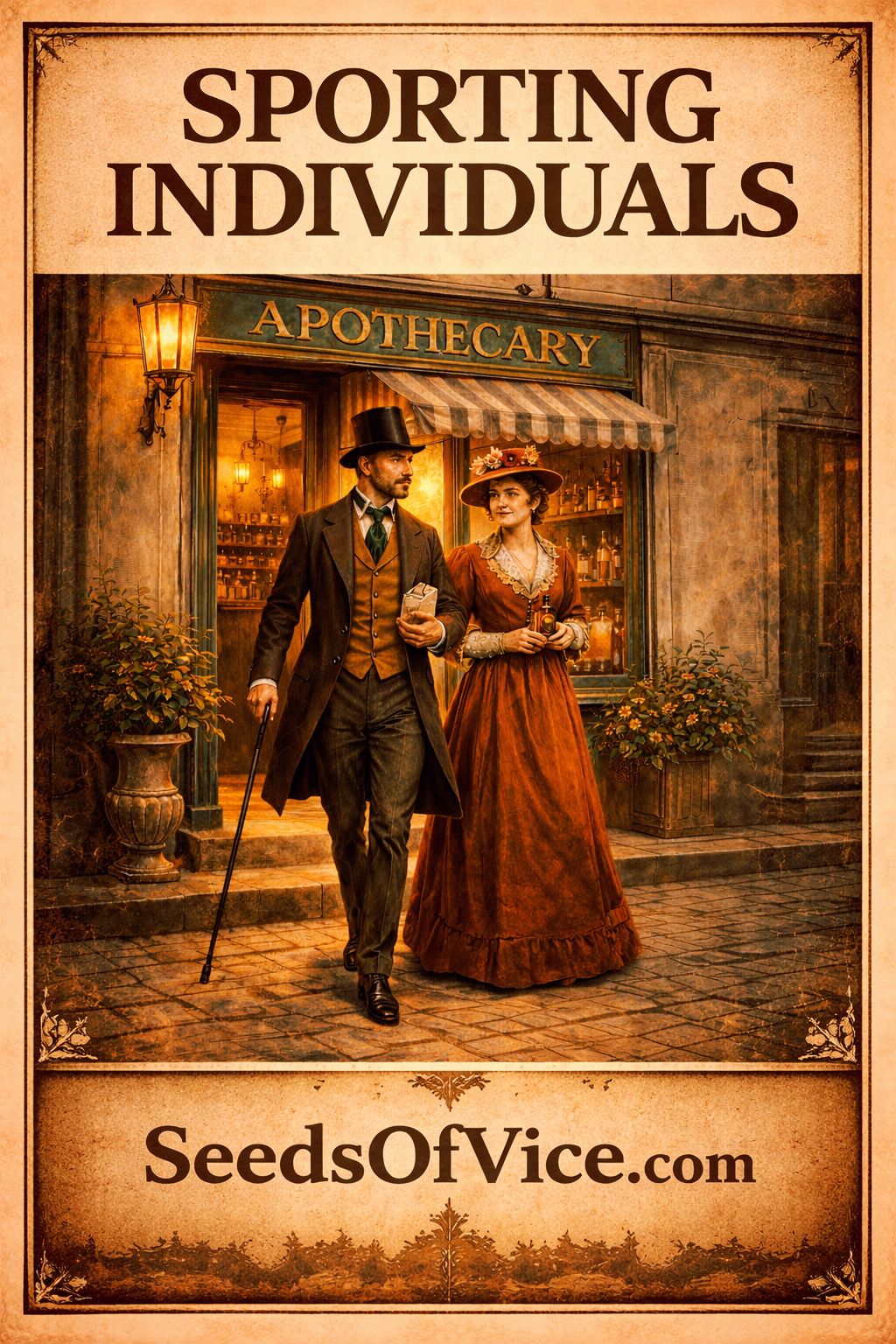
Sporting Individuals
There comes a point in a person’s life when the world grows quiet in a particular way. Not peacefully quiet, but the kind that follows recognition. It is the moment when a man or woman realizes that the systems they believed would carry them forward may not. The doctors, the institutions, the assurances of modern life… these things begin to look less like foundations and more like arrangements that may or may not hold true when the pressure is on.
For most people this realization arrives slowly. It does not come as a dramatic revelation but as a series of small recognitions that accumulate over time. A request denied. A treatment refused. A door quietly closed that was once assumed to be open. Eventually the pattern becomes impossible to ignore. Which tends to leave a person dead silent.
A person discovers that they do not, in fact, possess a healthcare system. They have only themselves…
It is at this moment that a choice appears. It is not announced and it does not arrive with ceremony, but it is there nonetheless. A person may continue forward as they have been, drifting between approval and condemnation, adjusting themselves to the judgments of others, waiting for relief to arrive from outside their own authority. Or they may choose another path entirely.
They may choose to become a Sporting Gentleman or Gentlelady.
The Sporting Gentleman is not defined by clothing, wealth, or social standing. The term has nothing to do with leisure or the superficial ideas that modern culture sometimes attaches to the word “sporting.” In the sense intended here, a Sporting Gentleman is a man or woman who has accepted responsibility for the direction of their own life.
This begins with a simple recognition: their cup belongs to them.
Every person carries a cup. It contains their circumstances, their suffering, their hopes, their opportunities, and the consequences of their choices. Many people spend their lives believing that someone else is responsible for filling or emptying this cup. They wait for institutions to manage it, for experts to regulate it, for the approval of others to determine how it should be handled.
The Sporting Gentleman understands something different. The cup is theirs.
They may pour into it.
They may pour out of it.
But they are the one holding it.
Owning the cup does not mean controlling every circumstance. No one possesses that kind of power. Illness, injury, loss, and hardship arrive whether invited or not. Ownership instead means claiming authority over direction. It means deciding how one will move forward regardless of the conditions that exist.
This decision immediately introduces a second reality: power and responsibility travel together.
If a person acquires power over their pain… whether through medicine, discipline, knowledge, or sheer endurance they must also accept the responsibilities that accompany that power. Every tool that reduces suffering carries the potential to reshape the life of the person who holds it. It can restore independence, but it can also introduce vulnerability. It can strengthen a person’s ability to live, but it can also expose them to manipulation if they lose control of the relationship.
Because of this, the Sporting Gentleman makes a deliberate calculation. They determine what they are willing to sacrifice in the pursuit of relief, and what they are not willing to sacrifice under any circumstance. There are always tradeoffs. Anyone who claims otherwise has not yet examined the matter closely enough. The question is not whether sacrifices will exist, but which ones a person is willing to make. A Sporting Gentleman makes these decisions consciously. They do not drift into them. They are not led by their emotions.
One principle stands above the rest.
The Sporting Gentleman must always preserve the ability to walk away from their pain medicine.
This rule protects everything that matters. When a person loses the ability to step away from the tools they use to manage their pain, those tools gain absolute authority over their life. History offers endless examples of what happens when power becomes absolute. It does not merely influence behavior but rather reshapes identity, judgment, and independence until little remains of the individual that is not altered by the relationship.
Maintaining the ability to walk away keeps the balance intact. The tool remains a tool. The person remains sovereign.
This principle also requires something that modern culture rarely encourages: the ability to live, when necessary, in the natural state of pain.
Pain is not pleasant, and no honest person would claim otherwise. Yet the capacity to endure it without panic removes one of the most powerful mechanisms through which people can be manipulated. A person who knows they can survive without relief cannot easily be coerced. Their decisions remain their own… as does their life.
It also protects them from desperation. When relief becomes the only acceptable condition of existence, individuals may seek it in dangerous places, accepting substances or circumstances that carry risks far greater than the pain they were attempting to escape. The Sporting Individual avoids this trap by maintaining discipline over their baseline. They remember that the medicine is a break from life, not the foundation of it.
Because of this understanding, powerful medicines are approached with reverence.
Reverence does not mean fear, nor does it mean romantic fascination. It means recognizing the true nature of the medicines in one’s hand. Some offer small benefits and carry small risks. Others possess a range that extends across the entire landscape of human suffering. These medicines can restore a life that pain has interrupted, allowing a person to think clearly, work productively, and pursue the ambitions that once seemed unreachable. But the same tools, approached carelessly, can take away as much as they offer. They can erode discipline, replace identity, and slowly reshape a person’s life around the drugs themselves. For this reason, the Sporting Gentleman never becomes casual about the power they hold. Familiarity invites carelessness. Reverence maintains awareness.
The Sporting Gentleman also understands that this path will often be walked without being witnesses.
Pain is an intensely private experience. Even the most compassionate observers cannot fully inhabit another person’s circumstances. Their reactions are shaped by their own fears, their own assumptions, and the limitations of what they can see from the outside. Waiting for universal understanding is therefore a losing strategy. Instead, the Sporting Individual measures themselves by their own conduct. They pursue discipline whether anyone is watching or not. They do not rely on the approval of others to confirm that their decisions are justified.
In fact, they often protect themselves from the emotions of observers. Other people’s feelings such fear, anger, pity, or misunderstanding can easily distort the choices a person makes about their own life. By maintaining a certain distance from these reactions, the Sporting Gentleman preserves clarity of self.
Another reality must also be faced. In many cases, the world will already suspect them.
Modern society is uneasy around powerful medicines and the individuals who rely on them. Labels appear quickly, and once applied they can be difficult to remove. A person may find themselves viewed through a lens that has little to do with their actual conduct or character.
The Sporting Individual does not attempt to escape this reality by argument alone. Instead, they adopt a higher standard of behavior than the minimum required by law. The law of the land establishes only the boundary that separates acceptable behavior from punishable behavior. A Sporting Gentleman chooses to operate above that boundary, guided by personal discipline rather than external enforcement.
They do this because their dignity cannot be granted or removed by institutions. It exists in their conduct.
All of this effort might seem severe if one believed the goal was merely survival. But survival is not the true objective.
The purpose of this discipline is opportunity.
When a person regains authority over their pain and the direction of their life, something important returns to them… hope. Not the fragile hope that depends on promises from others, but the durable kind that grows from self governance. The future becomes open again. Doors that once seemed permanently closed begin to appear as possibilities.
At this point life stops being a contest between endurance and exhaustion. It becomes something more ambitious. The energy that pain once suppressed begins to return in the form of curiosity, ambition, and the desire to pursue dreams that had long been postponed if not forgotten.
This is why the path of the Sporting Gentleman matters. It is not about suffering nobly or proving strength to the world. It is about reclaiming the conditions that allow a person to live fully.
The world may not always approve of this choice. It may misunderstand it, question it, or attempt to discourage it. But the Sporting Individual does not wait for approval before governing their own life.
They simply pick up the cup and walk with it.
And from that moment forward, the direction in which it travels belongs to them as so long as they do not allow themselves to forget how they decide to walk is as important as where they decide to go in life.
~ The Sporting Gentleman

Leave a Reply